 Outfits
Two people, one trip, two packing lists. Not one shared pile and an argument at the door.
Packing for a partner (or a kid) fails when you plan “the trip” as one closet. They do not wear the same shoes. They should not share one list.
1. Give each person their own looks
Same days. Same weather. Separate outfits. Dinner on Thursday is two looks, not one.
Same days. Same weather. Separate outfits.
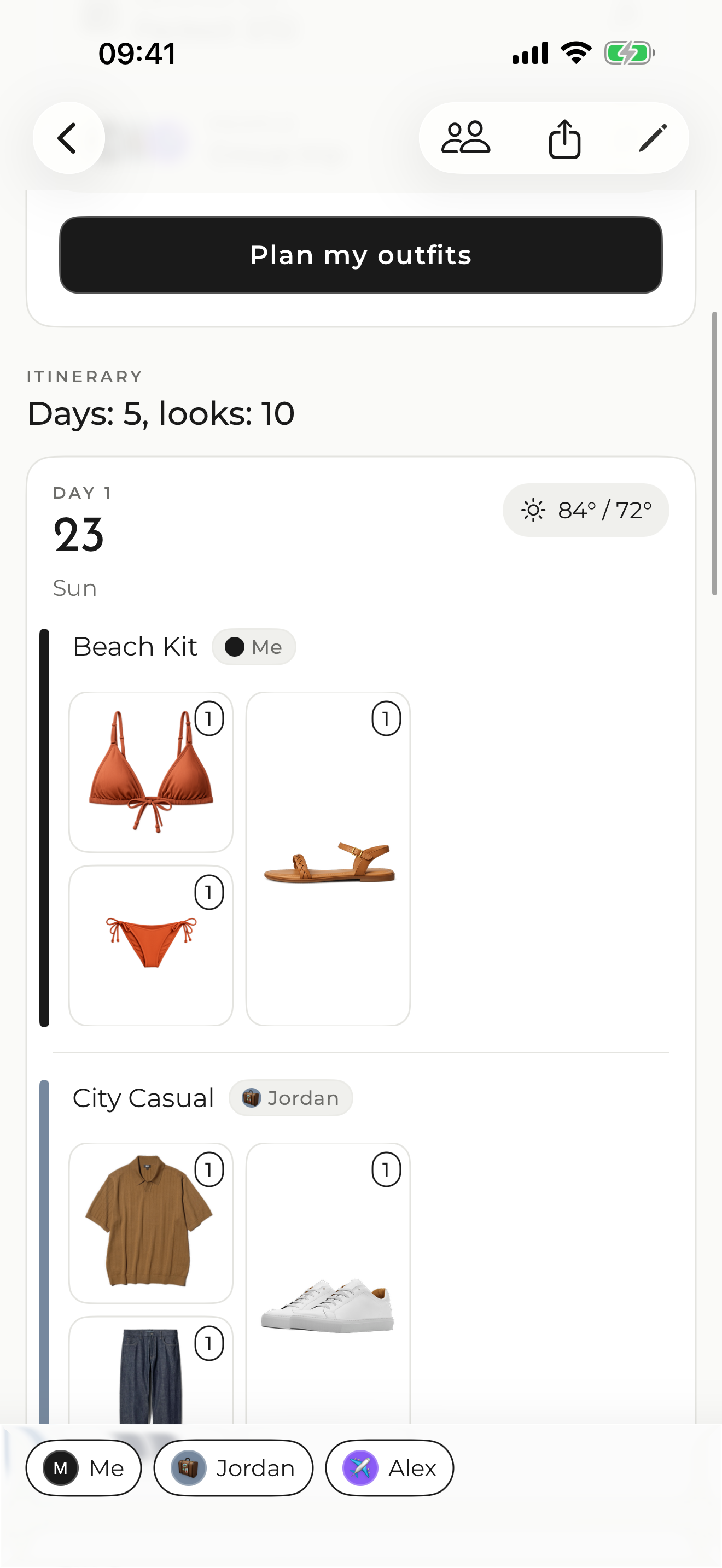
2. Share the trip, not the clothes
You can plan side by side. You should not merge wardrobes. If they want the blue shirt, it lives on their list.
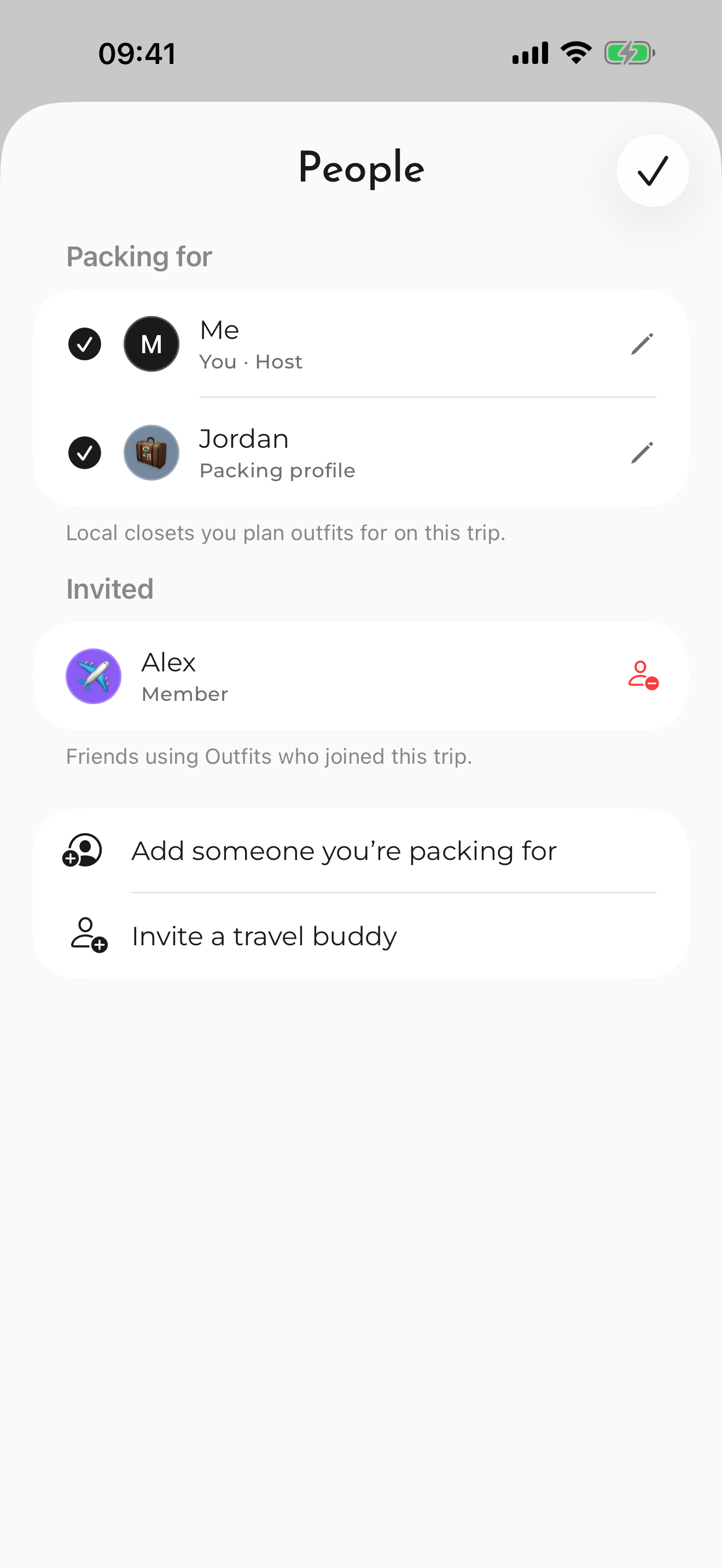
3. Build two lists from two sets of looks
When each day has a look for each person, the lists write themselves. You see what is shared (charger, sunscreen) and what is not (their sneakers).
When each day has a look for each person, the lists write themselves.
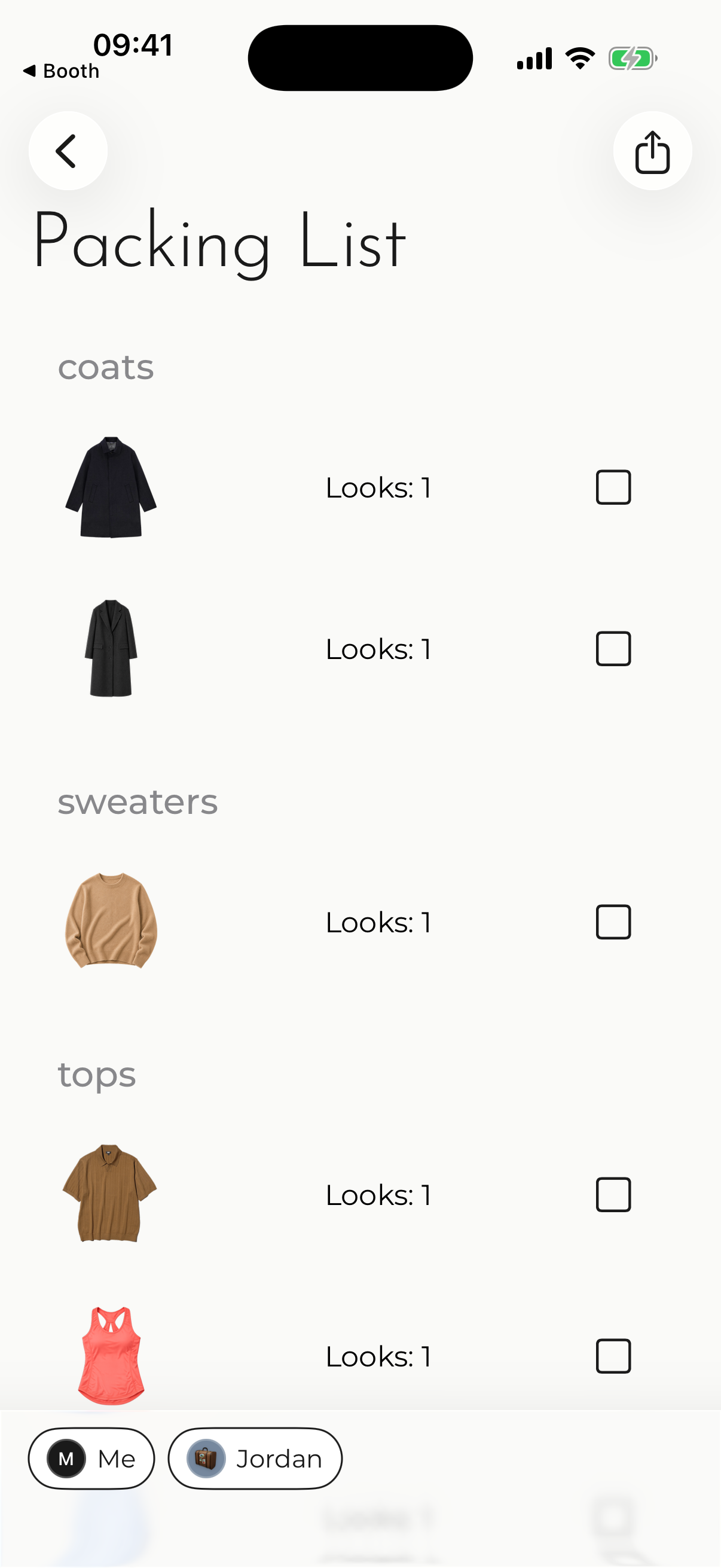
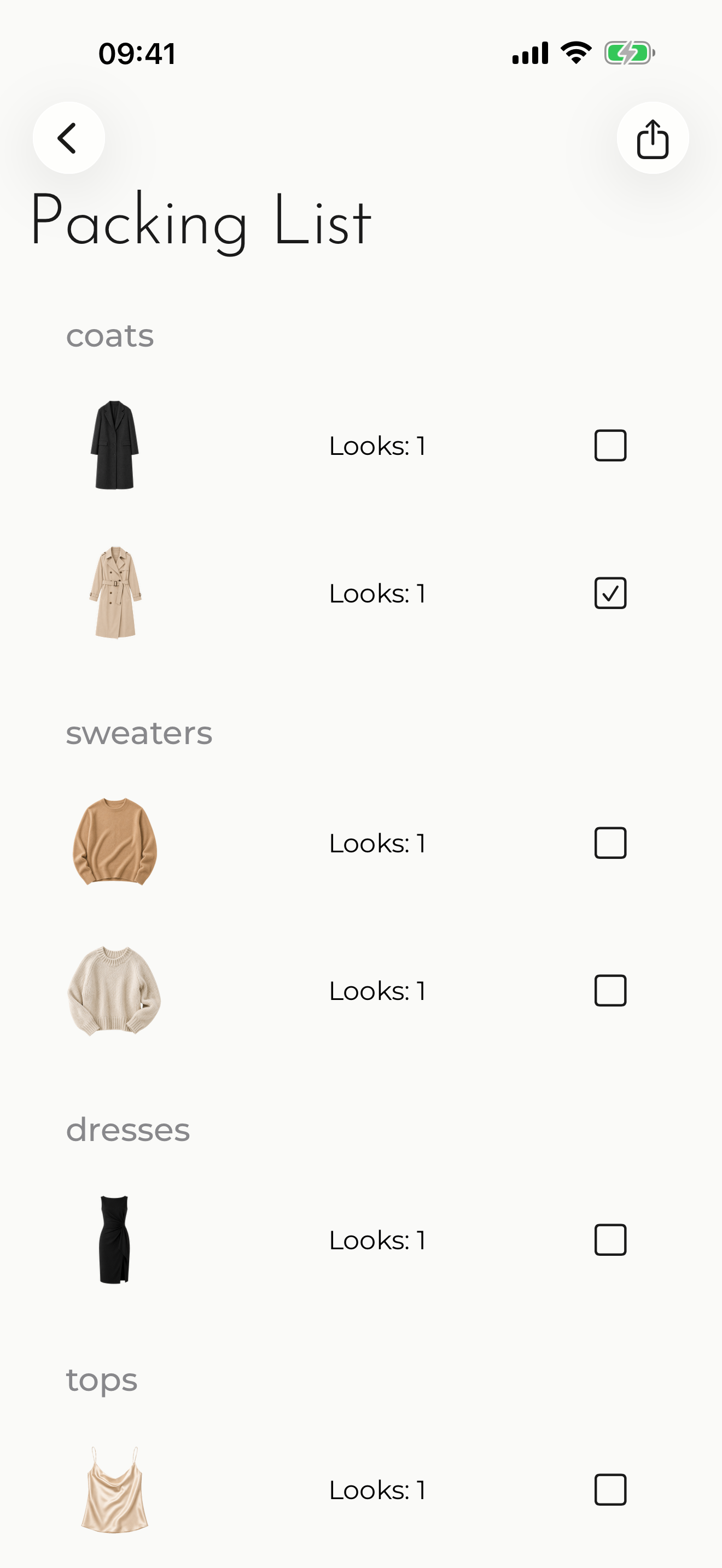
4. Pack the bags from the lists
Check off as it goes in. One person can pack both bags if the looks are already decided. That is the whole reason to plan before you zip.
What this looks like in Outfits
Add a profile for each person on the trip. Each profile has its own closet and looks. You plan the same week together, then leave with a packing list per person. Invite them to the trip if they want to edit their own days.

Free to download. No ads.